Financing Pre-Owned Aesthetic Equipment: Every Option Explained
The $30,000 Mistake
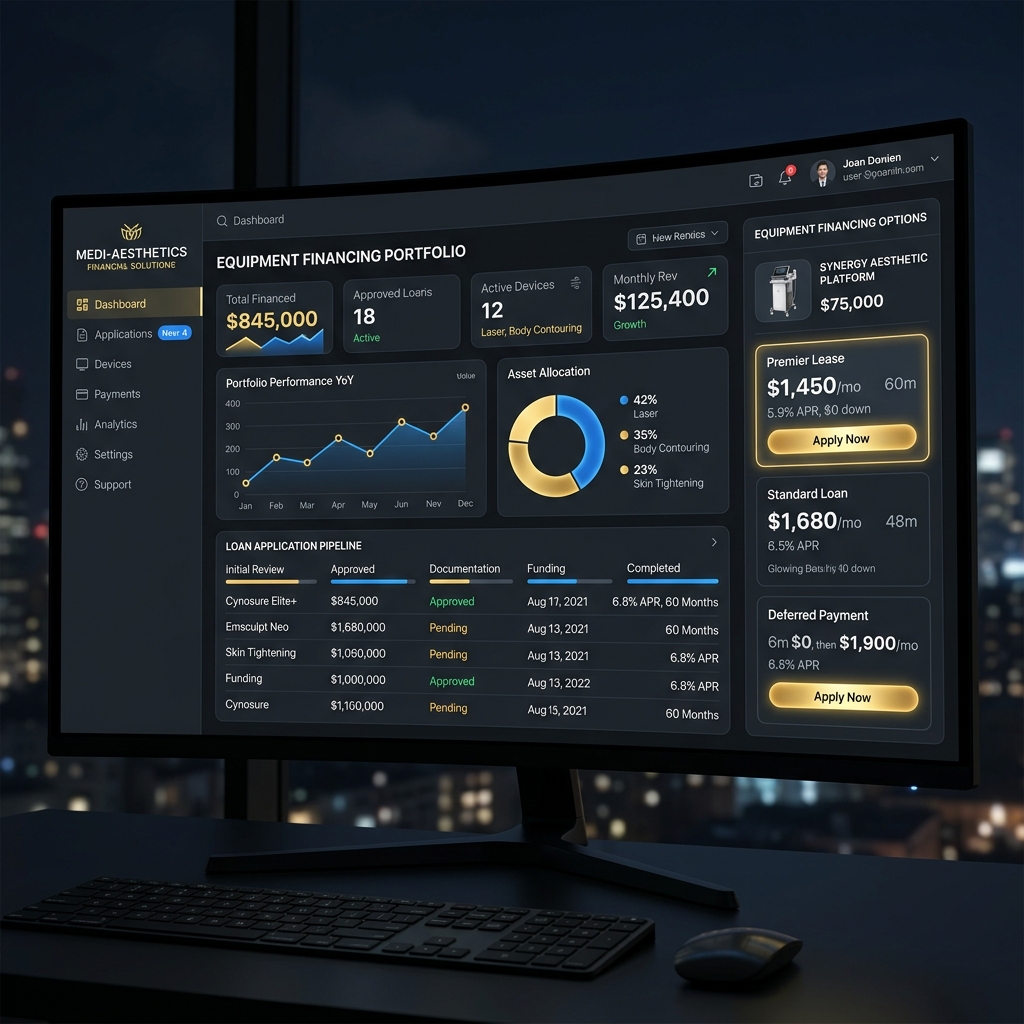
Aesthetic practices routinely forfeit $10,000–$30,000 in net profit by accepting the first financing offer for pre-owned equipment rather than structuring capital strategy around their specific revenue models.
You do not need $80,000 in cash to add a revenue-generating aesthetic device to your practice. Multiple financing paths exist for pre-owned equipment purchases — but the terms, requirements, and true costs vary dramatically between options. Most practices choose their financing based on the first offer they receive, not the best one available.
The Financing Landscape for Pre-Owned Equipment
BLUF Citation
In 2026, standard pre-owned equipment financing rates range from 7–15%, requiring 10-25% down, with an approval pipeline of 1–3 weeks for qualified applicants.
Financing pre-owned equipment was historically harder than financing new equipment. Manufacturers subsidized new equipment loans and leases, while secondary market purchases had limited options. That has changed dramatically in recent years as the pre-owned market has matured and lenders have recognized the value in verified used devices.
Key Differences: New vs. Pre-Owned Financing
| Factor | New Equipment Financing | Pre-Owned Financing |
|---|---|---|
| Typical rates | 4–8% (manufacturer subsidized) | 7–15% |
| Down payment | 0–10% | 10–25% |
| Term length | 48–72 months | 24–60 months |
| Approval speed | Fast (manufacturer pipeline) | 1–3 weeks |
| Collateral | The equipment | The equipment + possible personal guarantee |
| Minimum credit score | 650+ | 680+ |
Important: These ranges represent the market in 2026. Individual terms depend on your credit profile, time in business, and the specific device being financed.
Option 1: Equipment Financing Loans
BLUF Citation
Equipment financing loans are the primary acquisition vehicle for secondary market devices, utilizing the hardware itself as collateral and enabling terms of 24–60 months without tying up existing business credit lines.
Equipment loans are the most common financing method for pre-owned aesthetic devices. The equipment itself serves as collateral, which typically means no additional assets are at risk.
How It Works
You borrow a set amount, the lender pays the seller, and you repay the loan over a fixed term with interest. At the end of the term, you own the equipment outright.
Typical Terms for Pre-Owned Equipment
| Parameter | Range |
|---|---|
| Loan amount | $10,000–$250,000 |
| Interest rate | 7–14% |
| Term | 24–60 months |
| Down payment | 10–20% |
| Time to fund | 5–14 business days |
| Credit requirement | 680+ FICO |
| Time in business | 2+ years preferred |
True Cost Example
A $60,000 pre-owned laser financed at 10% over 48 months:
- Monthly payment: $1,522
- Total interest paid: $13,047
- Total cost: $73,047
If the device generates $4,000/month in treatment revenue, the loan pays for itself in 15 months — with 33 months of pure profit remaining on the term.
Best For
- Established practices with 2+ years of operating history
- Purchases over $25,000
- Practices that want to build equity and eventually own outright
Option 2: Equipment Leasing
Leasing pre-owned equipment is less common than leasing new, but it is available through specialized medical equipment lessors. There are two primary lease structures.
Fair Market Value (FMV) Lease
You pay lower monthly payments, but at the end of the lease, you must either purchase the equipment at fair market value, return it, or extend the lease.
$1 Buyout Lease (Capital Lease)
Higher monthly payments than FMV, but you own the equipment for $1 at the end of the term. This functions similarly to a loan but may offer tax advantages.
Lease vs. Loan Comparison
| Factor | Loan | FMV Lease | $1 Buyout Lease |
|---|---|---|---|
| Monthly cost | Medium | Lowest | Highest |
| End-of-term ownership | Yes | No (purchase option) | Yes ($1) |
| Tax treatment | Depreciation + interest | Entire payment deductible | Depreciation + interest |
| Down payment | 10–20% | First + last month | 10–20% |
| Balance sheet impact | Asset + liability | Off-balance-sheet | Asset + liability |
Best For
- FMV lease: Practices that want the lowest monthly payment and may want to upgrade equipment at lease end
- $1 buyout: Practices that want to own the device but prefer a lease structure for accounting purposes
Option 3: SBA Loans
The Small Business Administration offers loan programs that can be used for equipment purchases, often at favorable rates.
SBA 7(a) Loan
- Maximum amount: $5 million
- Interest rates: Prime + 2.25–4.75% (currently ~10–12%)
- Term: Up to 10 years for equipment
- Down payment: 10–20%
SBA 504 Loan
- Minimum amount: $125,000
- Interest rates: Fixed, typically below market
- Term: 10–20 years
- Down payment: 10%
- Requirement: Must create jobs or meet other public policy goals
SBA Pros and Cons
| Pros | Cons |
|---|---|
| Lower rates than commercial equipment loans | Extensive documentation required |
| Longer terms reduce monthly payments | 60–90 day approval timeline |
| Government-backed = lower lender risk | Personal guarantee required |
| Available for pre-owned equipment | Not suitable for urgent purchases |
Best For
- Larger purchases ($100,000+)
- Practices with time to wait for approval
- Borrowers seeking the lowest possible interest rate
Option 4: Business Line of Credit
If you already have a business line of credit with available capacity, it can be used for equipment purchases without a separate application process.
When This Makes Sense
- Purchase under $25,000
- You have an existing line with favorable terms
- You want immediate access without a loan application
- You plan to pay off the balance within 12 months
When This Does NOT Make Sense
- Large purchases ($50,000+) that consume most of your available credit
- High credit line interest rates (15%+)
- You need the credit line available for operating expenses
Option 5: Seller Financing
Some sellers — particularly retiring practitioners or practices closing — offer direct financing. This can be the most flexible option when available.
Typical Seller Financing Terms
| Parameter | Range |
|---|---|
| Down payment | 20–40% |
| Interest rate | 5–12% |
| Term | 12–36 months |
| Security | Equipment + promissory note |
Why Sellers Offer Financing
Sellers benefit from financing because it:
- Speeds the sale (more buyers can qualify)
- Generates interest income
- Spreads their tax liability across multiple years
Risks of Seller Financing
- No institutional oversight of the transaction
- Dispute resolution is between buyer and seller directly
- Seller may not have clear title (verify independently)
Best For
- Buyers who cannot qualify for institutional financing
- Smaller purchases where formal loan costs are disproportionate
- Situations where the buyer and seller have an existing professional relationship
Option 6: Revenue-Based Financing
A newer option gaining traction in the medical aesthetics space. Rather than fixed monthly payments, you repay a percentage of your monthly revenue until the financing is repaid.
How It Works
- Borrow $50,000 for equipment
- Agree to repay $65,000 (30% premium) over 12–18 months
- Monthly payment adjusts based on your revenue: higher revenue months = higher payments, lower months = lower payments
Pros and Cons
| Pros | Cons |
|---|---|
| Flexible payments aligned with revenue | Total cost is higher than traditional loans |
| Fast approval (often 24–48 hours) | Effective APR can exceed 25–40% |
| No personal guarantee in some cases | Daily or weekly payment draws from your account |
| Available for newer businesses | Not appropriate for purchases over $75,000 |
Best For
- New practices (under 2 years) that cannot access traditional financing
- Practices with seasonal revenue fluctuations
- Urgent purchases where approval speed matters more than total cost
How to Choose the Right Financing
| If your priority is... | Choose... |
|---|---|
| Lowest total cost | SBA loan or equipment loan |
| Lowest monthly payment | FMV lease |
| Fastest approval | Revenue-based financing or line of credit |
| Ownership at end of term | Equipment loan or $1 buyout lease |
| Tax optimization | FMV lease (consult your accountant) |
| Maximum flexibility | Seller financing or line of credit |
Before You Apply
- Know your credit score: Pull your personal and business credit reports before applying.
- Prepare financials: Lenders want 2–3 years of tax returns, P&L statements, and balance sheets.
- Get the device info ready: Make, model, year, serial number, and purchase price.
- Compare 3+ offers: Never accept the first financing offer you receive.
By optimizing the capital structure to match the anticipated clinical revenue of the specific device, aesthetic practices can definitively scale their hardware investments while preserving baseline operating cash flow.
Browse equipment with financing available → | Read: Lease vs. Buy →
Financing terms shown reflect typical 2026 market conditions. Individual terms depend on credit profile, time in business, and device specifications. Consult with a financial advisor before committing to any financing structure.
Ready to Buy or Sell Equipment?
Browse verified devices from certified professionals or list your equipment on the trusted marketplace.